

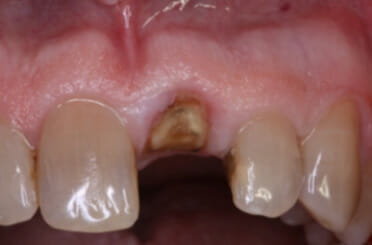
Implant Crown Before
Replacing Natural Teeth with the Next Best Thing
A dental implant is one of the most reliable and natural-looking ways to replace a missing tooth or multiple missing teeth. Dr. Fred Alger specializes in implant placement and dental implant surgery to help patients restore full function and confidence in their smiles — even when the jawbone has weakened due to tooth loss or bone loss.
Dental implants serve as artificial tooth roots that are surgically placed in the jawbone, providing a secure foundation for new artificial teeth such as crowns, bridges, or dentures. When properly cared for, implants can last for decades and significantly improve long-term oral health.
What Is a Dental Implant Made Of?
Our natural teeth have two main parts:
- The visible crown above the gum tissue, and
- The root that anchors the tooth within the bone.
A dental implant mimics this structure using two main components:
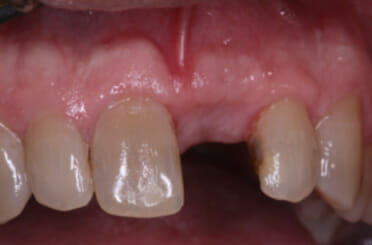
Implant Crown Before Step 2
1. The Implant (Implant Fixture or Implant Body)
A small titanium or metal post placed in the jaw through a gentle surgical procedure under local anesthesia. The implant integrates with the bone in a process called osseointegration, forming a stable anchor.
2. The Artificial Tooth (Prosthesis)
A custom-made crown, dental bridge, or removable prosthesis that attaches securely to the implant once healing is complete. The result looks, feels, and functions like a real tooth.
Some patients may receive a single dental implant, while others require multiple implants to restore an entire arch of teeth. The number of implants placed depends on each patient’s treatment needs and the type of dental implant chosen.
Understanding the Dental Implant Procedure
The dental implant procedure typically involves several steps spread over a few months to ensure optimal results and long-term stability.
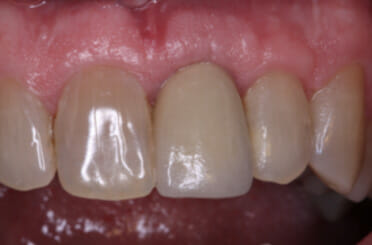
Implant Crown After
- Initial Consultation:
Dr. Alger performs a comprehensive evaluation of your oral health, bone density, and gum tissue condition to design a personalized treatment plan. - Implant Placement:
During dental implant surgery, the implant post is inserted into the jawbone using precision technology. This step is performed comfortably under local anesthesia or light sedation. - Healing Period:
Over the next several months, the implant fuses with the bone tissue, creating a strong base for your new artificial tooth. Proper healing time is crucial to ensure long-term success and prevent nerve injury or implant instability. - Restoration Phase:
Once healed, a restorative dentist or oral surgeon attaches the final crown, bridge, or denture. These restorations are created in a dental lab to match the shape, color, and size of your natural teeth for the best esthetic result.
The entire process, from implant placement to final restoration, can take several months, but the outcome is a permanent, natural-looking tooth replacement option that enhances comfort and quality of life.
When the Jawbone Needs Support: Bone Grafting
In some cases, patients do not have enough healthy bone to support a dental implant. Bone loss may occur from infection, previous tooth extraction, or long-term missing teeth.
To restore strength and structure, Dr. Alger may perform bone grafting prior to dental implant placement. This procedure uses safe materials from tissue banks or synthetic grafts to rebuild bone volume. In certain situations, grafting material can even be placed at the same time as the implant.
With 4–6 months of healing, new bone forms, creating the ideal environment for successful implant placement. This step increases survival rates and helps ensure that your new teeth function naturally for years to come.
Types of Dental Implants
There are two main types of dental implants used in modern dentistry:
- Endosteal Implants:
The most common type, these are placed directly into the jawbone and hold crowns, bridges, or dentures. -
Subperiosteal Implants:
These sit on top of the bone but beneath the gum tissue, used when patients have limited bone height and are not candidates for traditional implants.
Dr. Alger will help determine the best option based on your anatomy, bone quality, and desired restoration.
Benefits of Dental Implants
Patients choose dental implant therapy because it offers advantages unmatched by other tooth replacement options such as bridges or dentures:
- Prevents bone loss and supports healthy facial bones
- Restores the ability to chew and speak with ease
- Protects neighboring teeth by avoiding alteration of natural tooth structure
- Improves overall oral health and stability
- Maintains facial appearance and prevents sunken cheeks often caused by tooth loss
- Provides a long-term solution with a very high success rate (over 95% according to the American Academy of Periodontology)
Unlike removable dentures, implants integrate with your bone to function like real teeth, requiring only regular proper care and good oral hygiene.
Recovery and Healing Process
Following your implant surgery, mild swelling or tenderness is normal for a few days. Patients usually manage discomfort with over-the-counter pain medication. Eating soft foods and keeping the area clean promotes smooth healing.
Most patients return to normal activities within 24–48 hours, though complete integration between the implant body and bone can take several months. Once the area is fully healed, the new restoration can be placed, completing your smile transformation.
To maintain results, brush and floss daily, visit your dental provider for routine checkups, and avoid poor oral hygiene habits like smoking, which can compromise healing.
How Much Do Dental Implants Cost?
The cost of dental implants varies depending on the number of teeth being replaced, any additional procedures such as bone grafting, and the type of restoration used. While implants may cost more initially than other options, their durability and natural function make them one of the most cost-effective solutions long term.
During your consultation, Dr. Alger will review all costs, timing, and potential risks to ensure you feel confident in your treatment plan.
The Best Way to Restore Your Smile
For patients missing one or more teeth, dental implants represent the closest replacement to a natural tooth — both in appearance and strength. Dr. Alger’s precision, experience, and advanced technology ensure each implant fixture is placed with accuracy to protect vital structures such as the maxillary sinus and inferior alveolar nerve.
Whether you need a single implant, a fixed partial denture, or a full-arch restoration, you can trust Dr. Alger and his team for compassionate, expert care and outstanding results.