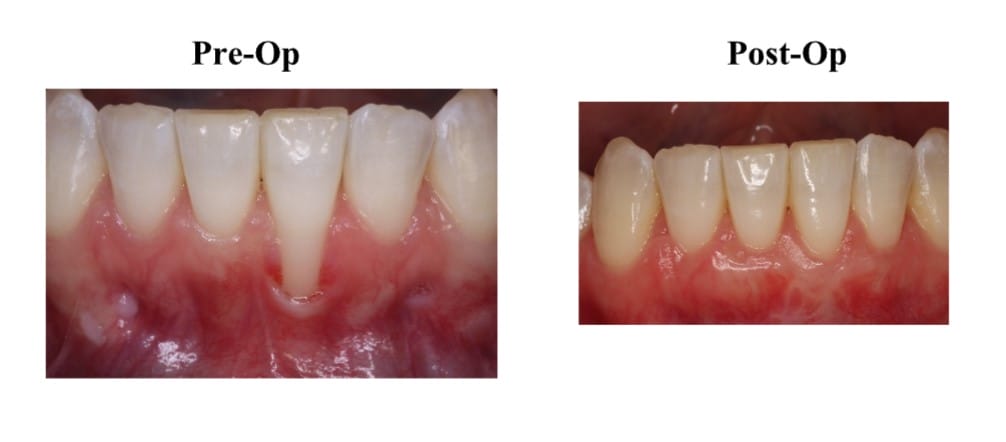

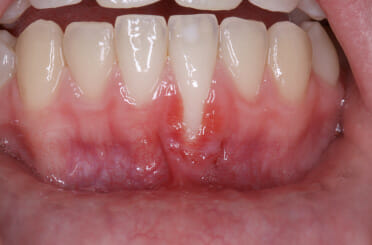
Tissue Graft Before
Restoring Gum Health and Protecting Your Smile
If you’ve noticed your gums pulling away from your teeth, exposing the roots, or increasing your tooth sensitivity, you may be experiencing gum recession. Left untreated, this condition can lead to tooth loss and impact your overall oral health.
At Dr. Fred Alger Periodontics & Implants in Gahanna, our team provides gentle, predictable gum graft surgery to restore healthy gum tissue, cover exposed tooth roots, and improve the appearance of your smile.
What Is Gum Recession?
In a healthy mouth, the gum tissue snugly covers the tooth roots and protects them from bacteria, heat, and cold. When the gums begin to recede, part of the root surface becomes exposed, often resulting in sensitivity, root exposure, and aesthetic changes in your smile.
Common causes of gum recession include:
- Periodontal disease (gum infection)
- Aggressive tooth brushing or hard-bristled brushes
- Thin gums or genetic predisposition
- Misaligned teeth or clenching and grinding
- Tobacco use or poor oral hygiene
- Natural aging
Once the gums have receded, they do not grow back on their own. That’s why gum graft surgery is often the most effective way to rebuild and strengthen the gum line.
How Does Gum Graft Surgery Help?
Gum grafting is a proven surgical procedure that replaces or reinforces thinning or receding gum tissue. The goal is to cover exposed roots, reduce tooth sensitivity, and prevent further damage to the supporting bone.
During the procedure, Dr. Alger takes a small piece of connective tissue (usually from the roof of your mouth) or uses donor material from a certified tissue bank. The graft is then carefully placed and secured over the area of recession with fine sutures.
As healing progresses, the new soft tissue integrates with your existing gums, creating a natural, stronger barrier that protects the roots of your teeth.
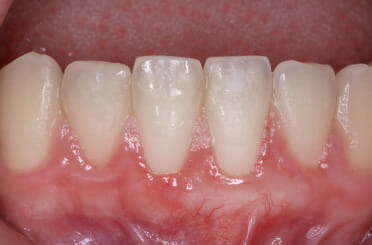
Tissue Graft 6 Weeks After Treatment by Dr. Alger
Types of Gum Grafts
There are several types of gum grafts, and the right approach depends on your gum condition, the amount of recession, and the area being treated:
- Connective Tissue Graft
This is the most common method, where a small piece of connective tissue is taken from beneath the top layer of the roof of the mouth and placed over the affected area. It’s often used for treating exposed roots and thin gums. - Free Gingival Graft
In this technique, Dr. Alger takes a small amount of gum tissue directly from the roof of the mouth and attaches it to the area needing thicker gums. It’s typically used when additional gum tissue is required to prevent further recession. - Pedicle Graft
If there’s sufficient gum tissue near the affected area, Dr. Alger may reposition a small flap of tissue to cover the exposed root. This method allows faster healing and maintains blood supply to the graft.
Each of these graft procedures is highly effective in improving gum health, reducing tooth sensitivity, and preventing future bone loss.
What to Expect During the Procedure
Dr. Alger and his team make every effort to ensure a comfortable, positive experience. Gum graft surgery is performed under local anesthesia, and you also have the option for conscious sedation if desired.
Here’s what you can expect:
- Consultation and Planning – Dr. Alger will perform an exam, discuss your specific needs, and determine the type of gum graft best suited to your case.
- Preparation and Anesthesia – A local anesthetic is applied to numb the area completely.
- Tissue Collection – A small piece of tissue is gently obtained from the roof of your mouth or a donor source.
- Graft Placement – The tissue graft is positioned over the area of gum recession and secured with delicate sutures.
- Healing Process – The treated area begins to integrate with your existing gum tissue as healing takes place over several weeks.
Most patients are surprised at how quick and comfortable the experience is. Procedures typically take less than an hour, and patients can return home immediately after.
Healing and Aftercare
Following surgery, it’s normal to experience mild discomfort, slight swelling, or tenderness for a few days. Dr. Alger provides detailed aftercare instructions to support a smooth recovery.
Here are some common guidelines:
- Stick to a soft foods diet (yogurt, smoothies, mashed potatoes, cottage cheese, or ice cream) for the first few days.
- Avoid hot foods and spicy meals until the area heals.
- Take pain medication or over-the-counter pain relievers as recommended.
- Use any prescribed special mouth rinse to keep the surgical site clean.
- Limit physical activity for the first 24–48 hours.
- Avoid brushing or flossing the graft site until advised by Dr. Alger.
Most patients find that healing is straightforward, with complete recovery typically occurring in 4–6 weeks.
The Benefits of Gum Graft Surgery
Choosing gum graft surgery can dramatically improve both your oral health and the aesthetics of your smile. Key benefits include:
- Covers exposed tooth roots and reduces sensitivity
- Prevents further gum recession and bone loss
- Restores a balanced, even gum line
- Improves smile appearance and confidence
- Provides thicker, stronger gum tissue
- Protects against future dental problems
- Supports overall gum and tooth stability
Patients often notice not only better comfort and protection but also a significant cosmetic improvement once healing is complete.
Is Gum Graft Surgery Right for You?
You may be a good candidate for gum graft surgery if you:
- Have visible gum recession or thin gums
- Experience root exposure or sensitivity
- Have a history of periodontal disease
- Want to protect your teeth from further damage
- Wish to enhance the appearance of your smile
During your consultation, Dr. Alger will assess the extent of your gum recession and discuss the most appropriate treatment plan to achieve healthy, lasting results.